


Nvidia’s next chapter runs through Taiwan
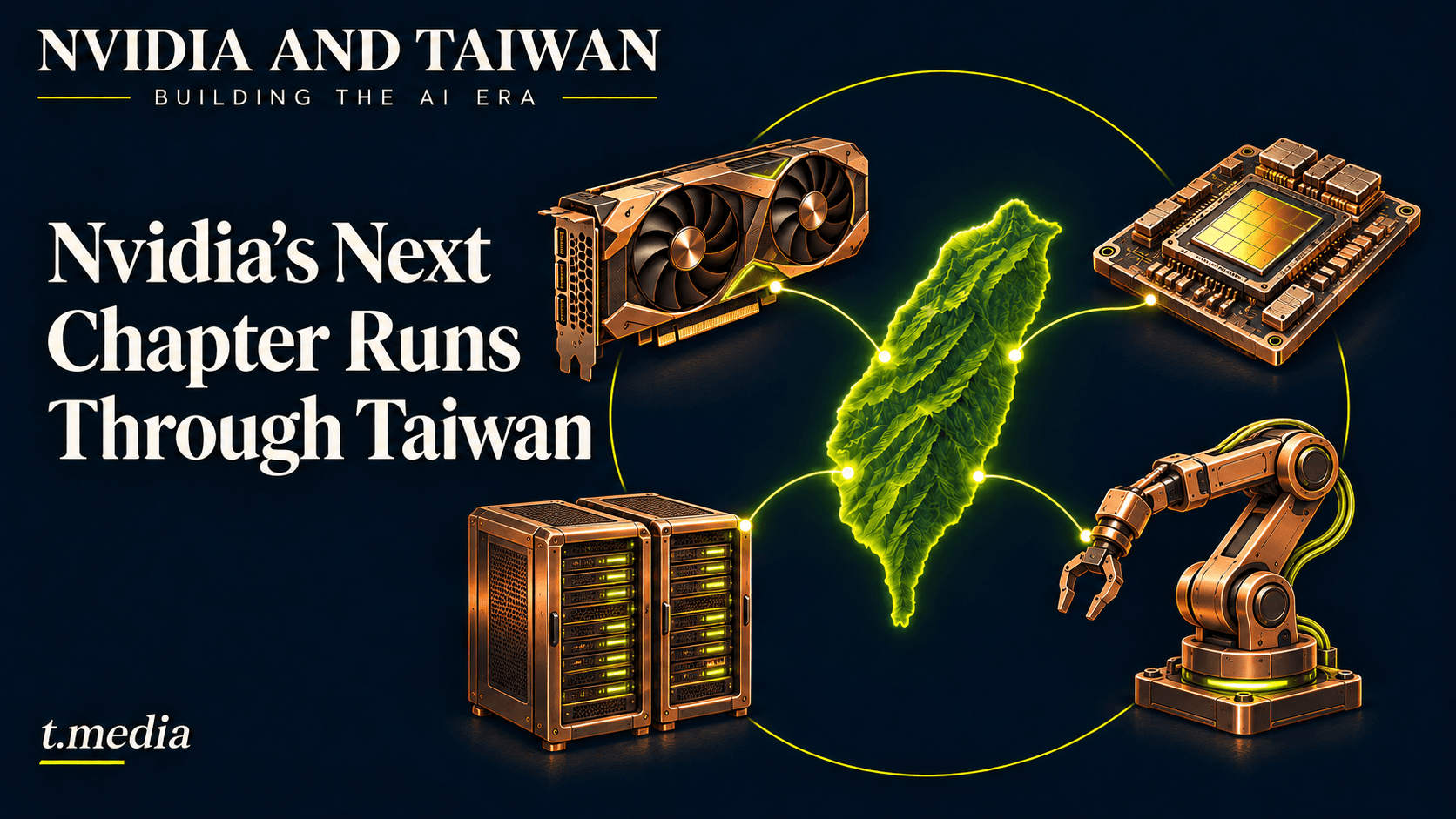
Nvidia’s rise from a graphics chip startup to a leader in AI computing has depended on relationships built over decades with Taiwan’s manufacturers. Those partnerships now face new demands and new opportunities.
Jensen Huang’s resignation and return as chief executive have drawn attention to the company he co-founded in 1993. Its history also reveals how TSMC and Taiwan’s PC manufacturers helped turn ambitious designs into products that reached customers worldwide.
Their contribution has expanded with each generation of computing. TSMC manufactured ever more complex processors. Graphics card makers supplied the engineering and distribution that brought those chips to PC buyers. Today, Taiwan’s suppliers deliver the packaging, power equipment, cooling, and complete server systems needed to put Nvidia’s AI chips to work.
The coming phase will test their ability to coordinate several demanding technologies at once. Cloud companies are developing custom AI processors tailored to their own workloads, often drawing on the same Taiwan suppliers. Nvidia is also pursuing physical AI, meaning machines that can interpret their surroundings and perform useful tasks in factories, hospitals, and other settings.
TVBS World’s six-part series, Nvidia and Taiwan: Building the AI Era, traces the partnership from its foundations in PC gaming to the challenges ahead.
1. How Taiwan helped Jensen Huang build Nvidia
TSMC provided the chipmaking foundation, while Taiwan’s graphics card manufacturers brought Nvidia’s processors to PC buyers. Together, they established the relationships and manufacturing capabilities that later supported Nvidia’s AI expansion.
2. How gaming paid for Nvidia’s long bet on AI computing
Gaming sales financed years of investment in programmable processors and software, giving Nvidia time to develop technology that researchers would later apply to AI.
3. How TSMC’s CoWoS packaging became the key to Nvidia’s AI processors
Connecting processors with fast memory became essential to performance. Advanced packaging then became the bottleneck that limited the supply of AI computing.
4. How Nvidia’s move into AI servers transformed Taiwan’s PC manufacturers
Companies known for notebooks and electronics assembly learned to build entire racks of AI computing and remade their businesses in the process.
5. How Taiwan’s suppliers will shape Nvidia’s next AI systems
Advances in power, cooling, and optical connections must reach production together as Nvidia competes against rivals supported by many of the same suppliers.
6. How Nvidia and Taiwan are taking AI into the physical world
Factories and hospitals offer testing grounds for intelligent machines. Adoption there depends on reliability, useful work, and costs that customers can justify.
The partnership began with graphics cards for PC gamers. Its next products will be judged in data centers, factories, and hospitals.