



Taiwan’s coldest weather of winter arrives with rain, wind
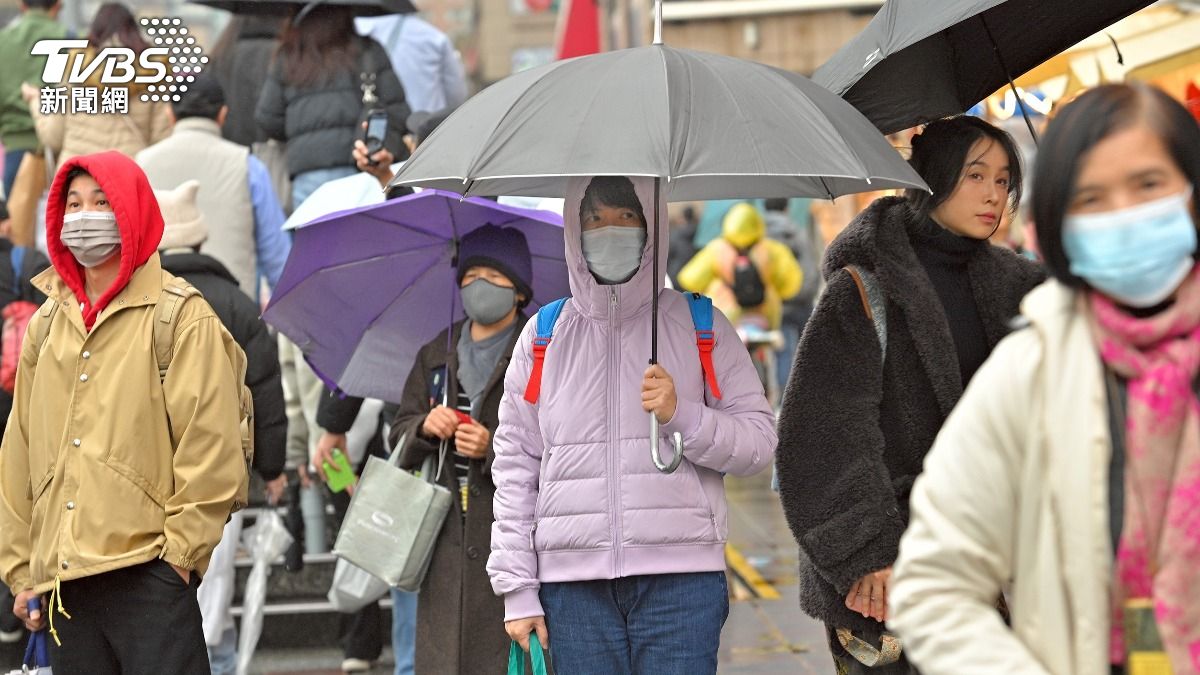
TAIPEI (TVBS News) — Taiwan faces its coldest temperatures of the winter season as a powerful cold air mass grips the island Friday (Jan. 2) through Sunday (Jan. 4). Meteorologist Wu Der-rong (吳德榮), an adjunct associate professor at National Central University (中央大學), issued the warning. He predicts low-lying areas could see temperatures plunge below 7 degrees Celsius (44.6°F), urging residents to brace for dangerous cold.
The Central Weather Administration (中央氣象署) recorded the lowest temperatures in Taiwan's lowlands at 9.6 degrees Celsius (49.3°F) by 8:22 a.m. Friday (Jan. 2). Both Hukou Township (湖口鄉) in Hsinchu County and Shimen District (石門區) in New Taipei City registered these readings. The agency issued cold weather advisories for New Taipei City, Keelung, Taipei, Taoyuan, Hsinchu County, Miaoli County, Yilan County, and Kinmen County, warning temperatures could fall below 10 degrees Celsius (50°F).
Wu said northern and northeastern Taiwan are experiencing intermittent rain from the cold front, while Hualien and Taitung may see scattered showers. He urged northern Taiwan residents to stay warm as cold conditions persist throughout Friday. The meteorologist noted the cold air will weaken from Sunday (Jan. 4) to Monday (Jan. 5), bringing clear and comfortable weather, though mornings and evenings will remain chilly.
Another cold air mass will arrive Monday (Jan. 5) evening through Tuesday (Jan. 6) morning, according to Wu. Weather will turn clear and cold again Tuesday afternoon as strong cold air moves southward. Temperatures from Wednesday (Jan. 7) to Saturday (Jan. 10) could drop to the season's lowest, potentially surpassing the first cold wave as the most severe winter event. ◼