


Taiwan, EU eye closer chip ties as SEMICON Taiwan opens
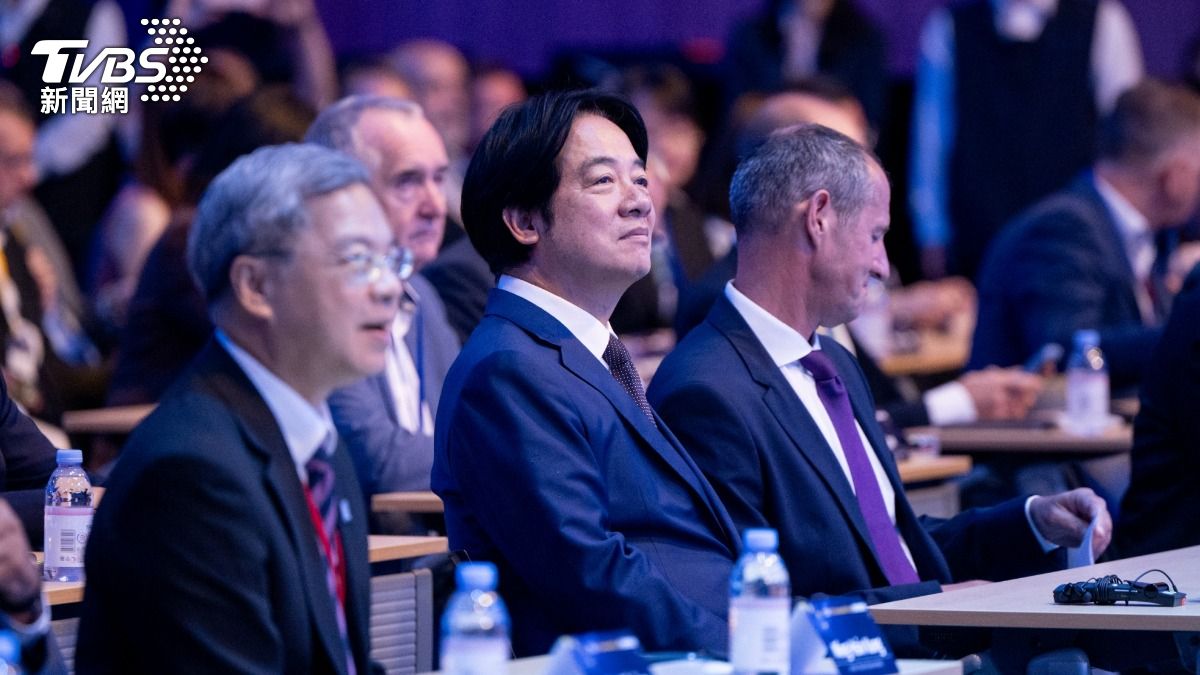
TAIPEI (TVBS News) — President Lai Ching-te (賴清德) on Tuesday (Sept. 1) called on European nations to sign double taxation and investment agreements with Taiwan, expressing hope to position the island as a strategic partner for building a "more secure, diverse, and resilient" global semiconductor ecosystem.
"We hope the European nations will promote agreements on double taxation and investment with Taiwan," President Lai said at an EU Investment Forum in Taipei. "This will help unlock our immense potential for investment and industrial cooperation."
The event, co-organized by the European Economic and Trade Office in Taiwan, the Ministry of Foreign Affairs (外交部), and the Ministry of Economic Affairs (經濟部), took place one day before SEMICON Taiwan 2026 opens with record participation.
Bilateral trade reached almost US$75 billion (NT$2.37 trillion) last year, making the EU Taiwan's fifth-largest trading partner, Lai added. Taiwanese investments in the EU surged by 650% over the last decade, according to the president. The EU is also Taiwan's largest source of foreign investment, indicating high complementarity in key industrial sectors, Economic Affairs Minister Kung Ming-hsin (龔明鑫) noted in his keynote.
Lai welcomed the EU's proposed Chips Act 2.0, introduced by the European Commission in June as part of its Technological Sovereignty Package. The legislation aims to speed up commercialization and bring chips to market faster. The act is expected to be finalized by mid-2027.
Taiwan has a highly integrated industrial ecosystem, while Europe offers world-class capabilities in research and development, equipment, materials, and high-value-added manufacturing, Lai said.
"By combining our advantages and building a strategic partnership, we can create even greater shared value," the president continued. "Together, we can shape a global semiconductor ecosystem that is more secure, diverse, and resilient."
Lai highlighted the Taiwan Electrical and Electronic Manufacturers' Association's (TEEMA, 臺灣電機電子工業同業公會) announcement to establish a technology park in Poland. The project, announced in March, could attract investments worth billions of dollars, according to the Polish Investment and Trade Agency.
Kung cited other major Taiwanese investments in Europe. Taiwan Semiconductor Manufacturing Co. (TSMC, 台積電) has established a 12-inch wafer fabrication facility in Dresden, Germany. Foxconn (鴻海) has partnered with French companies on advanced packaging and testing. GlobalWafers (環球晶) has invested in a silicon wafer plant in Italy.
The Ministry of Economic Affairs has been working to "transform complementary advantages into concrete cooperation projects" through institutionalized dialogue mechanisms with the EU, Kung explained. Discussions have extended beyond trade and investment to include economic security, supply chain resilience, and collaboration on AI, semiconductors, robotics, and energy.
Taiwan's outreach comes as the EU pursues its own semiconductor ambitions under the banner of "technological sovereignty." Henna Virkkunen, the European Commission's executive vice-president for tech sovereignty, said in June that Europe was "not planning to work in isolation and produce everything ourselves" but needed to identify "risky dependencies."
The EU remains reliant on foreign providers for more than 80% of digital products and services, according to the European Commission. The original Chips Act has failed to achieve its goal of doubling EU global chip market share to 20% by 2030. Europe currently produces only about 10% of the world's semiconductors.
The EU's vision also includes ensuring European control over critical infrastructure. Virkkunen said the bloc wants a "kill switch" capability for critical systems such as undersea cables, allowing Europe to shut them down in a crisis without relying on foreign operators. The EU must ensure it can control critical infrastructure during emergencies, she said.
SEMICON Taiwan 2026, one of the world's largest semiconductor trade shows, opens Wednesday at Taipei Nangang Exhibition Center. The three-day event will feature more than 1,300 exhibitors and 4,300 booths from 65 countries. More than 100,000 professionals are expected to attend.
Lai said Taiwan will continue working closely with Europe to build stronger supply chains and more resilient economies. ◼ (At time of reporting, US$1 equals approximately NT$31.61)