



Lai tells military to get AI-ready as China threat looms
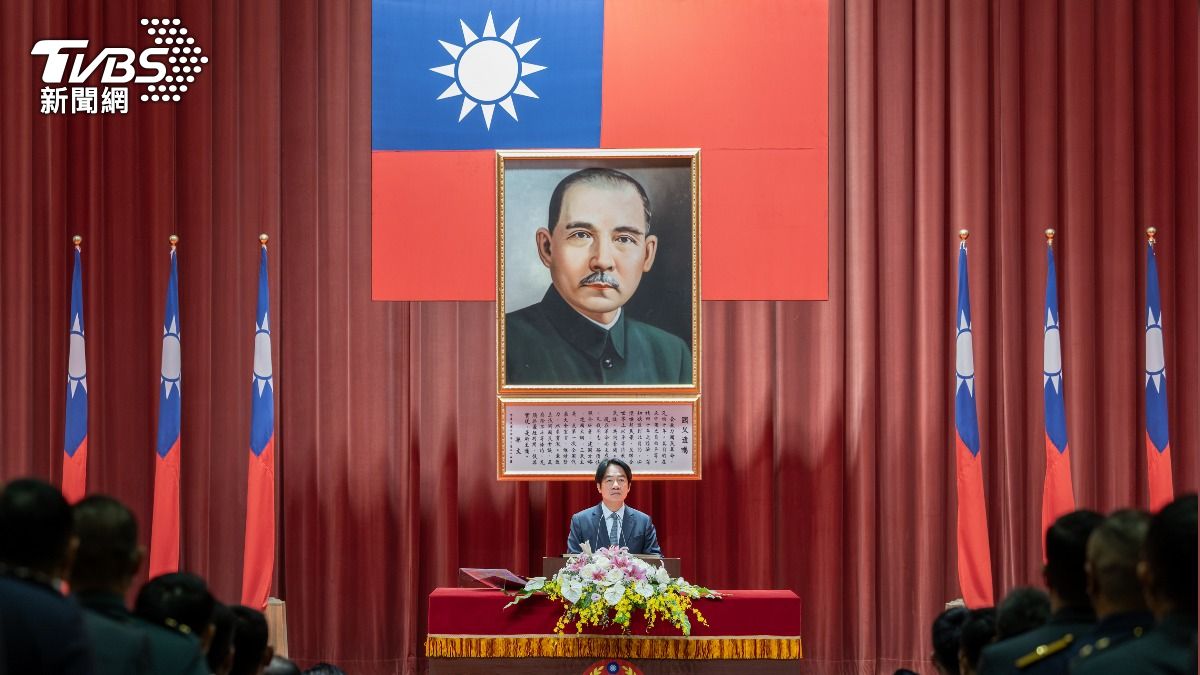
TAIPEI (TVBS News) — President Lai Ching-te (賴清德) warned Monday (Sept. 7) that Chinese threats to neighboring countries are "increasingly severe." He urged Taiwan's military to transform into a "new generation" force capable of integrating artificial intelligence and asymmetric warfare capabilities to defend the Taiwan Strait.
Speaking at National Defense University (國防大學) for the opening ceremony of the military's advanced officer training program, Lai outlined three priorities for future commanders: cultivating international strategic thinking, embracing technological innovation, and building team trust through principled leadership.
"Only by continuously strengthening national defense and investing in national defense can we ensure peace through strength," Lai said, invoking the classical Chinese adage "forgetting war invites danger" (天下雖平,忘戰必危) to warn against complacency.
The president, who serves as commander-in-chief, pledged that the government would be the military's "strongest backer." He committed to continued investment in defense resources and improvements to service members' compensation and working conditions.
Lai said the international situation is "rapidly changing" and that AI, unmanned systems and space technology are reshaping the future of warfare. Taiwan must continuously strengthen its self-defense capabilities and enhance military expertise to "defend the peace and stability of the Taiwan Strait," he said.
The ceremony marked the start of the Class of 2027 advanced education program. Lai told the assembled officers that their return to the classroom reflected the nation's "higher expectations" for them.
"Advanced education is not about accumulating credentials, but about elevating one's level of thinking," Lai explained. He urged officers to develop cross-service and cross-domain integration capabilities to prepare for greater responsibilities.
Future forces must be "human-centered, AI-assisted and combat-oriented," the president continued. The language echoed remarks by Defense Minister Wellington Koo (顧立雄) at the graduation ceremony for the previous class on Aug. 21.
Koo had told graduating officers that Taiwan's military faces "gray zone harassment, cognitive warfare and compound threats from emerging technologies such as AI." He stressed that even the most advanced technology "cannot replace human leadership and judgment."
Gray zone tactics refer to coercive actions that fall below the threshold of armed conflict, including military exercises near Taiwan, incursions into Taiwan's air defense identification zone, and disinformation campaigns. "Our resolve to unite in defending sovereignty and safeguarding peace in the Taiwan Strait must never waver," Lai said.
Monday's ceremony was attended by senior defense and security officials. National Security Council Secretary-General Joseph Wu (吳釗燮) and Defense Minister Koo were present. The commanders of the Army, Navy and Air Force also attended, along with National Defense University President Tang Hua (唐華).
The number of officers enrolled in the Class of 2027 program was not immediately available. ◼