



AI servers lift Taiwan’s PCB makers beyond their PC roots
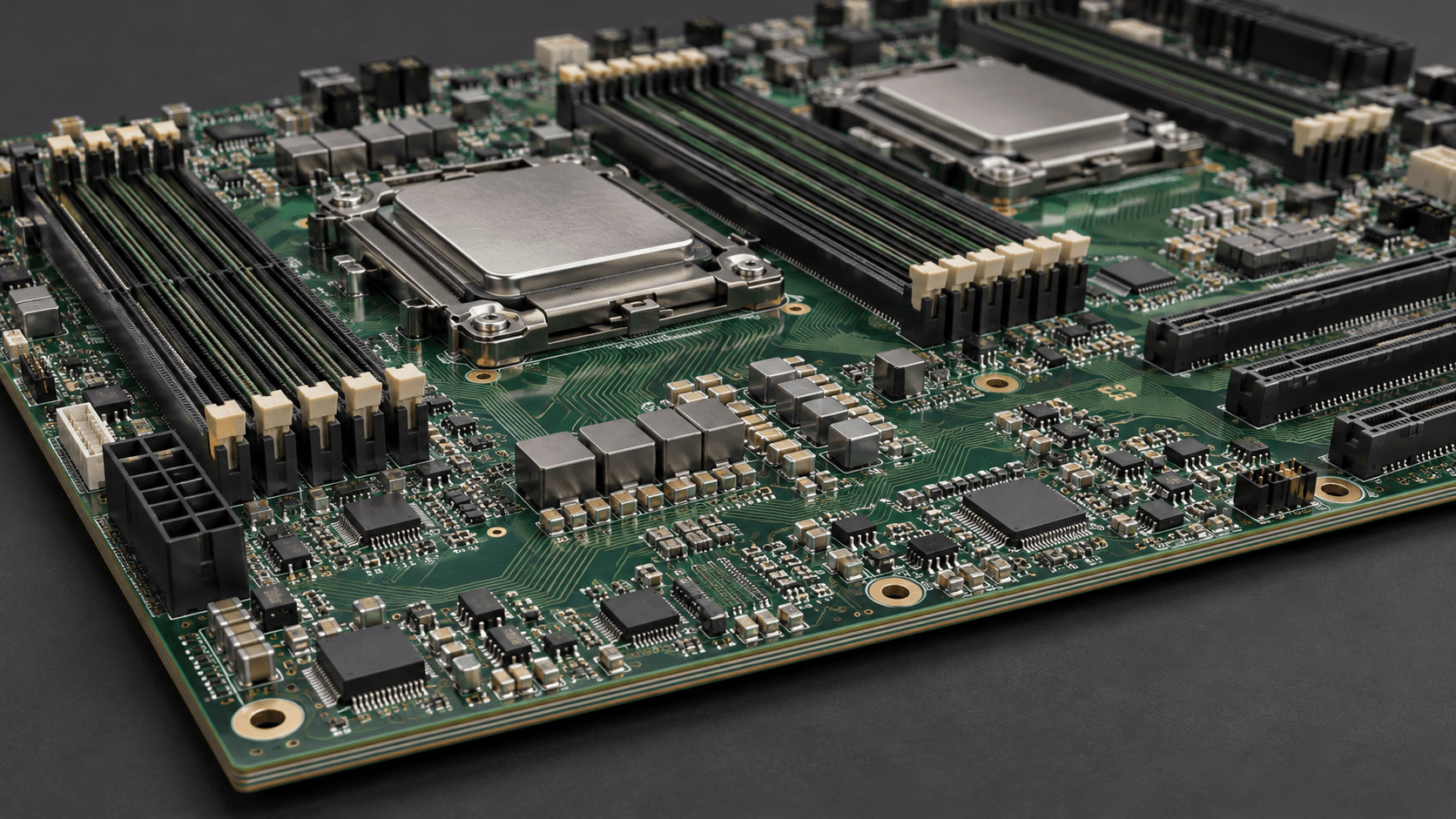
Taiwan’s printed circuit board makers, long in the background of the PC industry, have become critical to the speed and scale of AI server production. The work is bringing them larger orders, more demanding designs, and higher margins. Gold Circuit Electronics, Tripod Technology, and Zhen Ding are expanding as customers require boards that connect more powerful processors and carry data at speeds that leave little tolerance for manufacturing defects.
Printed circuit boards, or PCBs, provide the connections between components within servers, networking switches, and other equipment. Unlike substrates, which sit inside chip packages, these boards connect packaged processors with memory, storage, networking devices, and power circuitry.
Their construction is growing more complex. Additional wiring layers allow designers to fit more connections into limited space. Faster signals require carefully chosen combinations of copper, resin, and fiberglass to reduce signal loss. The tiny holes joining the layers must be positioned and formed accurately because their geometry affects communication speeds. These requirements turn material selection and manufacturing precision into essential parts of system performance.
Gold Circuit is among the clearest beneficiaries. Third-quarter 2026 revenue reached approximately NT$29.57 billion (US$901 million), up 67 percent from a year earlier, and gross margin rose to 38.7 percent. The company supplies advanced server and networking boards, with manufacturing capabilities extending to 56 layers. AI servers now account for more than half its revenue, and it is adding capacity in Taiwan and Thailand as custom AI processor projects add to demand.
Tripod is also benefiting from demand for circuit boards used in general-purpose servers and memory modules as well as AI accelerators. Third-quarter revenue increased 58.3 percent to NT$30.69 billion (US$936 million), and gross margin reached 34.84 percent. Profit attributable to shareholders more than doubled to NT$6.27 billion (US$191 million). Tripod is adding capacity in China and Vietnam to meet that demand.
Zhen Ding is using its scale in smartphone electronics to build a broader business in servers and optical communications. Quarterly revenue rose 36.4 percent to NT$64.62 billion (US$1.97 billion), with attributable net profit of NT$4.50 billion (US$137 million). Those consolidated results also include substantial consumer-electronics operations. Its combined server, optical module, and substrate revenue increased 152 percent in the first nine months. The company expects these businesses to sustain rapid growth in 2027, supported by capital expenditure exceeding NT$80 billion (US$2.44 billion) this year.
The move into AI has kept these suppliers with familiar customers. The companies assembling AI servers are the manufacturers that have built PCs and notebooks for decades and continue to do so. Their board suppliers have followed them into the data center with long-standing working relationships. Those ties shorten the path from a new design to a qualified board. What has changed is the product, which demands more layers, finer tolerances, and costlier materials than any PC motherboard requires.
US$ conversions use an illustrative exchange rate of NT$32.8 per US$1.