



Fiberglass cloth becomes critical to Taiwan’s AI supply chain
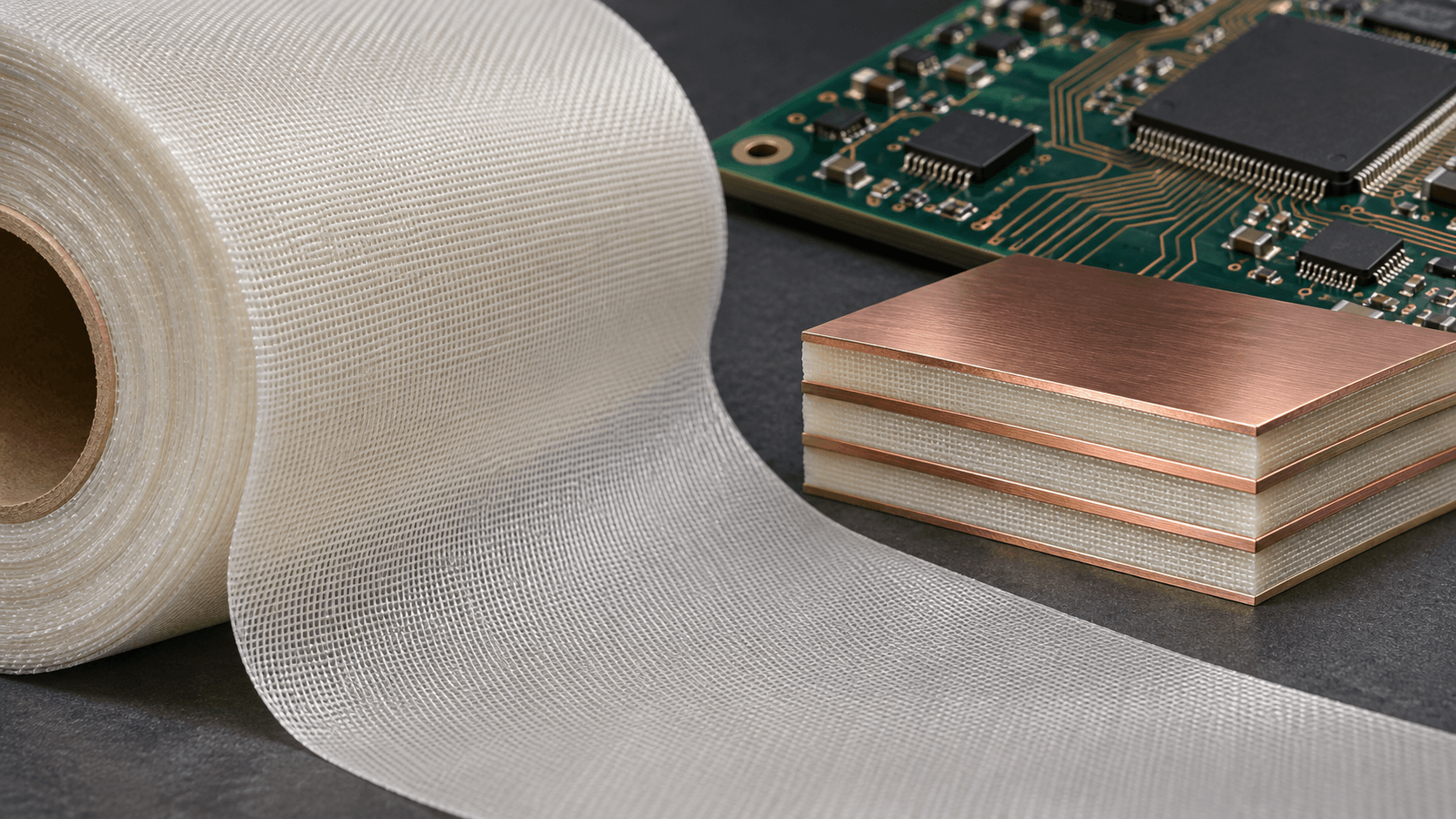
The performance of an AI server depends partly on a material that looks more like fabric than electronics. Fiberglass cloth reinforces the circuit boards and package substrates that carry its chips. As data speeds rise and packages grow larger, ordinary grades no longer meet the need. Taiwan’s suppliers are developing more demanding materials, raising prices, and expanding factories as customers compete for qualified supply.
The cloth is woven from fine glass filaments and combined with resin to form insulating layers between copper circuits. It provides strength and dimensional stability. Its composition also affects electrical performance, which makes the choice of glass a design decision in high-performance computing.
Two requirements are driving the upgrade. Low-dielectric, low-loss glass helps preserve fast electrical signals. Low-expansion glass helps package substrates resist distortion as temperatures change, protecting the fine connections beneath large processors and memory assemblies. Each property calls for its own specialty-glass formulation.
Taiwan Glass is moving further into both categories. Its third-quarter revenue reached about NT$14.14 billion (US$431 million), with net profit of NT$2.71 billion (US$83 million) and a gross margin of 31.6 percent. Those consolidated figures include its other glass businesses. A third phase of high-grade capacity is due for completion in 2027, and further investment will concentrate higher-value production in Taiwan.
Fulltech Fiber Glass makes its own glass yarn and weaves it, giving it control over successive manufacturing steps. Third-quarter revenue rose 76.5 percent to NT$2.71 billion (US$83 million), and net profit increased 176.3 percent to NT$782 million (US$23.8 million). Gross margin reached 49.1 percent. Its new Thai factory will make advanced cloth for AI servers, satellite communications, and chip substrates, with production scheduled to begin in the third quarter of 2027.
Smaller suppliers are growing quickly too. Glotech Industrial reported third-quarter revenue of NT$801 million (US$24.4 million), more than triple the year-earlier figure, and net profit of NT$285 million (US$8.7 million). Baotek’s quarterly sales increased approximately 47 percent, and its earnings per share rose roughly 90 percent to NT$0.78. Their results show how demand has spread beyond the largest producers.
The biggest single commitment comes from Nan Ya Plastics. It is investing NT$11.53 billion (US$352 million) in a fifth fiberglass cloth factory in Changhua, with a target of approximately 100 million meters of thin and ultra-thin cloth a year. Nine-month net profit reached NT$79.84 billion (US$2.43 billion), supported by electronic materials and investment income across its broader business.
Supply cannot expand as quickly as orders. Glass formulations, filament production, precision weaving, and customer qualification all take time, and the specialized equipment is itself in limited supply. Taiwan Glass says demand visibility extends through 2028.
New factories will eventually relieve the shortage, but the specifications will keep rising. Each increase in signal speed and package size asks more of the cloth, so a supplier that keeps meeting those requirements will become harder to replace with every generation of AI hardware.
US$ conversions use an illustrative exchange rate of NT$32.8 per US$1.