


Taiwan fishermen protest offshore wind farm development
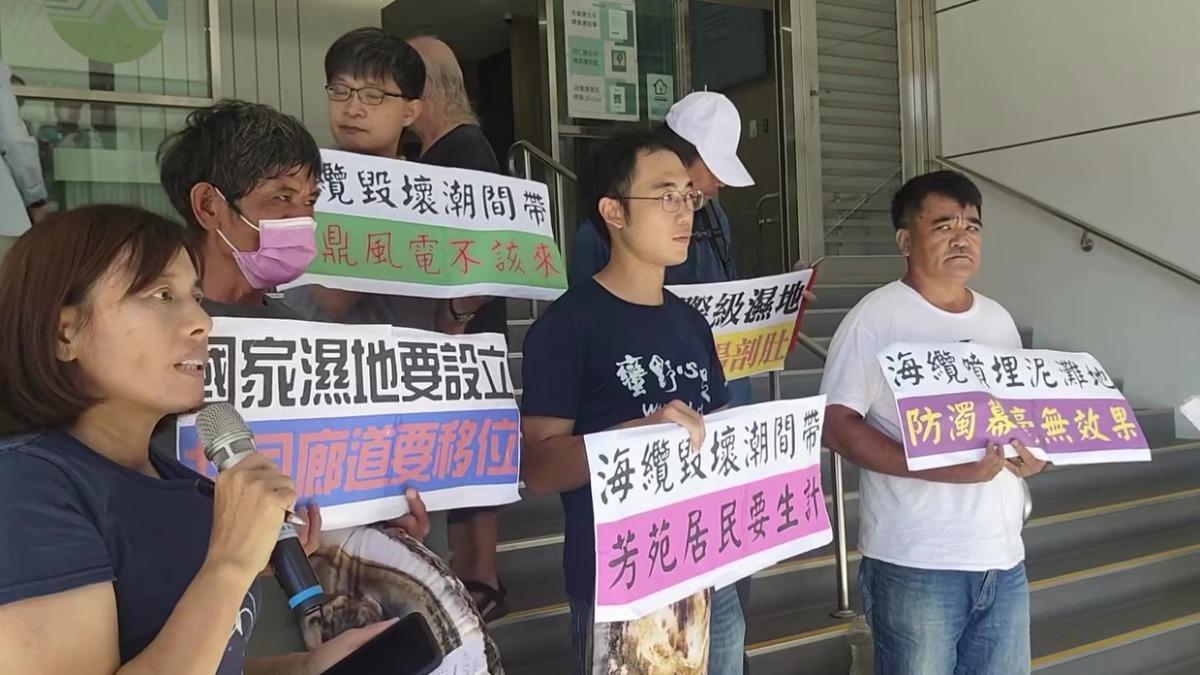
TAIPEI (TVBS News) — Environmental activists and residents from Changhua County (彰化) staged protests Thursday (Aug. 28) during a crucial Ministry of Environment (環境部), Taiwan's environmental regulatory body, meeting reviewing the controversial Haiding 1 offshore wind farm (海鼎一號). The contentious third preliminary environmental impact assessment session exposed deep community concerns about the project's potential approval and its devastating effects on traditional fishing livelihoods. The demonstration underscored growing tensions between Taiwan's renewable energy ambitions and coastal communities dependent on marine resources.
The Ministry of Economic Affairs (經濟部), Taiwan's primary economic planning agency, has withheld capacity allocation for the Haiding 1 project, creating regulatory uncertainty. Environmental committee members responded by recommending postponement of substantive reviews until official government approval materializes. Committee officials simultaneously urged project developers to enhance dialogue with local fishing communities, recognizing escalating conflicts over the wind farm's potential impact on marine ecosystems and traditional fishing grounds.
Local fishing communities have voiced strong opposition to the project, particularly concerning cable landing operations planned for Changhua's southern coastline. Hung Hsin-yu (洪新有), chairman of the Changhua Environmental Protection Union (彰化環保聯盟), documented how offshore wind development has increased sediment and water turbidity over recent years. Fisherman Li Kuo-chung (李國忠) reported construction-related disturbances force oyster farmers to absorb losses exceeding NT$2 million (around US$65,500) annually.
Project developers have substantially scaled back the wind farm's footprint from 95 square kilometers to approximately 31.6 square kilometers in response to environmental concerns. The revised design compensates for reduced area by increasing individual turbine capacity from 12 megawatts to 20 megawatts maximum. The streamlined configuration will feature no more than 45 high-capacity turbines, representing a significant compromise between energy production goals and environmental impact mitigation.
The Ministry of Economic Affairs recently announced that Corio's (科里歐) Haiding 1 project (360 megawatts) and enerVest's (德能英華威集團) DeShuai Wind Farm (德帥風場) (240 megawatts) failed to complete administrative contract signings for Taiwan's phase 3-2 block development program. Environmental committee members have demanded comprehensive worst-case scenario assessments for cable landing operations, requiring detailed evaluation of impacts on marine water quality, seabed ecosystems, and intertidal zones. Officials also mandated mitigation strategies addressing cumulative environmental damage to Taiwan's vital aquaculture and fishing industries. ◼